Who is Bartholomew Faire?  |  FAQ |  Musicians  |  Performances   |   Programmes  |  Contact  |  Pictures  |  History  |  Links  | 
Read about the making of The Red Book CD  |  Buy now! The Red Book CD!  |  Special Thanks

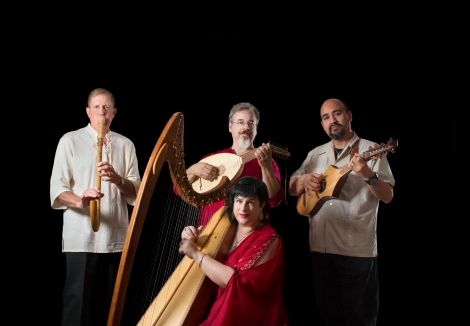
The early music collective Bartholomew Faire is an open-ended ensemble specializing in, but not limited to, the secular songs and dances of medieval and renaissance Europe. The ensemble is dedicated to presenting their repertory with lively authenticity so as to convey the immediacy this music had so long ago. In Bartholomew Faire, this is a three-step process:

1. Interpretation: The ensemble strives to understand all facets of the repertory, its context, subtext and pretext. In this way, the ensemble becomes a more authoritative vessel for the music.
2. Interpolation: In order for the music to come to life, the ensemble must 'breathe their own air into the notes,' and this means adding effective ornaments, inflections and accompaniments to the music.
3. Improvisation: This sadly neglected art form helps develop fluency in the archaic musical languages of the middle ages and renaissance, thus creating more opportunities for spontaneous musical expression in an 'authentic' manner.

The open-ended nature of Bartholomew Faire provides for a number of performance possibilities, ranging from large productions to intimate ensembles, mixing and matching voices and instruments as repertory (or occasion) demands. Though specializing in secular music, Bartholomew Faire has presented sacred music from the European and early American traditions as well.


Frequently Asked Questions:

What can Bartholomew Faire do for me?
We have provided music for all kinds of events, to great satisfaction and acclaim. Whether you are looking for soft, instrumental background music at a cocktail reception or a headliner for your festival of medieval music, Bartholomew Faire can 'personalize' its music for any event. We typically play without amplification, but we can use a PA system if absolutely necessary.

Do you guys sing, or play instruments, or what?
Both. Bartholomew Faire can present an all-instrumental, all-vocal or instrument and vocal program. The program arrangements reflect this diversity, giving the audience a variety of sounds and textures, even when performing music from only one particular source.

What are those funky instruments?
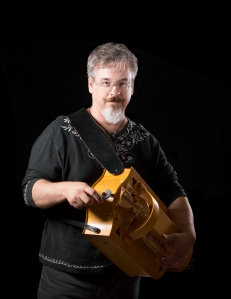
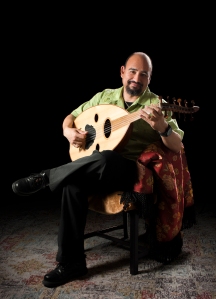
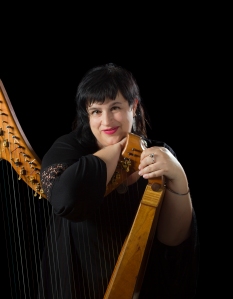
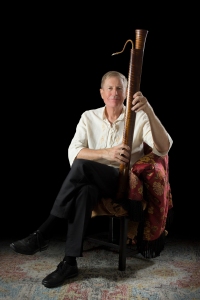
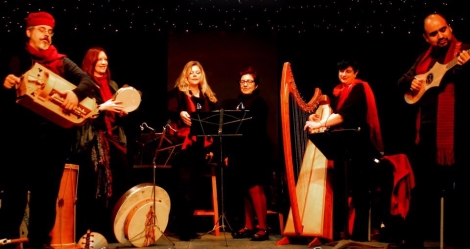
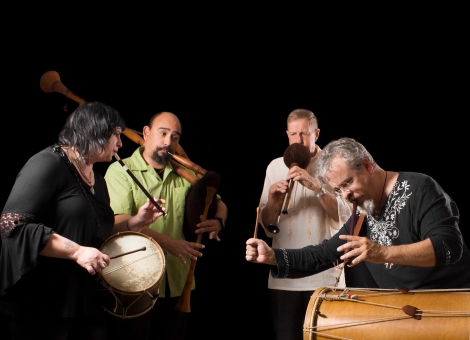
Bartholomew Faire features one of the valley's most eclectic instrument collections. A typical performance may have a lute, one of Stefan's hurdy-gurdies, a medieval harp, a renaissance guitar, mandolin, psalteries (bowed and plucked), exotic wind instruments like recorders, pennywhistles, ocarinas and capped reed instruments, pipes and tabors of various sizes, a string drum and other various percussion. All the instruments are authentic to the time period (or at least reasonably so) and some were built by Stefan. Our instrumentarium is growing all the time, so if you see us do the same concert program that we did three years ago, the arrangements and instruments could be radically different!

Where do you get your music?
Director Stefan Dollak spends much of his free time researching, making modern editions of music from facsimile, listening critically to CDs and going on (sometimes frustrating) treasure hunts to find cool and unusual music for Bartholomew Faire. University libraries and CD liner notes alike help in this detective work.

I saw a Cappella Sonora concert and it was, like, the same people on stage. Are you guys the same group?
Sort of but not really. While both groups feature an overlap in personnel, Cappella Sonora is directed by Jim De Fazio, who selects the music, makes the arrangements and focuses on the artful sacred polyphony of the late middle ages and renaissance.

I'd like to get in on the fun! Can I be in Bartholomew Faire?
Bartholomew Faire is an open-ended collective, and we always enjoy jamming with like-minded musicians. We believe that the key to growth lies in co-operation, not competition, so we fully support collaboration between groups. If you would like to 'sit in' with us sometime, give us a call!


THE PERFORMERS:

Stefan Dollak (director): baritone and occasional countertenor voice, lute, pipe & tabor/string drum, hurdy gurdies, recorders, penny whistle, capped reeds, ocarina, mandolin, psaltery and hand percussion.
Jim De Fazio: basso voce, renaissance guitar, lute and percussion.
Danielle Franklin: mezzo-soprano voice, harps, pipe & tabor/string drum, recorder, mandolin and hand percussion.
Irene Rosenthal: recorders and bowed psaltery.
Debra Jo Davey alto voce
Jeffrey Davey tenor voce
Robin Rio mezzo-soprano voce
Renee Hope Guillory contralto voce
Valarie Vousden alto voce

PAST PERFORMERS:
Curtis Taber: countertenor voice, hand percussion and harpsichord.
Monika Kinstler: viola da gamba.
Jeremy Moskowitz: tenor voice.
Jill Knapp: contralto voice, recorder and mandola.


EXTRY-SPESHAL GUESTS:
Rob Edsall: tenor voice
John Vousden: bass voice and guitar.
Amy Haltom: baroque violin


    Dear Friends of Bartholomew Faire,
    As usual, the "Fairies" have been keeping busy, working on some new tunes and polishing the old. And, of course, we have some wonderful events coming up:

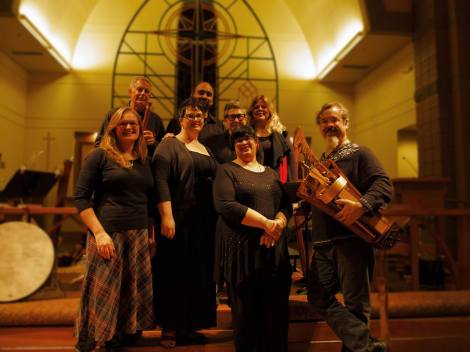
SATURDAY, NOVEMBER 12, at 7:30 PM at the TRINITY EPISCOPAL CATHEDRAL in DOWNTOWN PHOENIX : The combined forces of BARTHOLOMEW FAIRE, CAPPELLA SONORA, along with the new all-female vocal ensemble LADYFAYRE and local Hildegard scholar CHARLOTTE MILLER will present "QUEEN OF HEAVEN: The Virgin Mary as the Sacred Feminine in Medieval and Renaissance Music." This will be a multi-media concert event featuring songs and dances spanning the 12th-16th centuries, all celebrating the Virgin Mary in secular verse ("Edi Beo Thu, Hevene Quene " from 13th century England), motet (Josquin's masterwork "Ave maria, gratia plena "), plainchant ("O Viridissima Virga " by Hildegard of Bingen), dances from medieval Spain, and other treasures of the time when Europe was devoted to the mysteries of the Sacred Feminine. Of course, the performances will features the intense voices of Cappella Sonora, the heavenly trebles of LadyFayre, the wild instruments of Bartholomew Faire, and the 'earth mother' voice of Carlotte Miller. The music will be augmented by projected images of medieval art on two screens. The music and art, combined with the astounding acoustics of Trinity Cathedral, will combine to make this an unforgettable concert event that may help re-define the way early music is presented here in the Valley of the Sun.
Ticket prices are $15 for general admission and $12 for students and seniors. Call 602 403 2992 for more information. We will be able to accomodate Visa, Mastercard, AmEx and Discover at the door, with a $1 service charge. Charlotte Miller, Cappella Sonora and Bartholomew Faire will be selling their respective CDs at the concert, and the aforementioned credit cards are welcome.

SATURDAY and SUNDAY, NOVEMBER 19th and 20th is the DEVONSHIRE RENAISSANCE FAIRE! Yes, it's that time of year again. Bartholomew Faire will be performing and strolling as usual again this year, and once again, the Scholars of Metro will be singing. The Scholars are students from the Metro Arts Institiute of downtown Phoenix, who stole the show last year with classic madrigals, partsongs and frottolas like "Weep, O mine eyes", "Of all the Birds" and "El Grillo."
The Faire is always an inexpensive fun time for the whole family, and we get to dress up in some really cool outfits!

Be sure to mark your calendar with the above dates and times. We thank everyone who has gone out of their way to see us perform, and we always look forward to seeing you at our shows. As always, be sure to stop and say "hello!" (or "hail and well met" or whatever they say at the ren-faires these days...).

See you soon!
Stefan from Bartholomew Faire


Bartholomew Faire Programmes

Over the years, Bartholomew Faire has amassed an ever-evolving repertory, based on themes, venues, personnel and other circumstances. In addition to re-visiting old favorites and learning new tunes, Bartholomew Faire has also arranged collections of music into programmes for concert presentation. Here are some of the themes we've presented:

THE RED BOOK OF MONTSERRAT
This is a program of all ten songs from the famous "Llibre Vermell" manuscript of Montserrat monastery, which was written circa 1400. These are 'pilgrim songs,' deemed appropriate for the many faithful who made their way to the famous shrine to the Virgin Mary high in the mountains of Catalonia. As many of the songs are indicated as 'round dances' in the manuscript, Bartholomew Faire has given these gorgeous melodies the full complement of rhythm and vitality befitting such 'hymns of ecstasy.'

THE BABY'S OPERA
A concert of children's music especially for mature audiences. These are the subversive, bawdy and bloody 'original' versions of classic English Nursery Rhyme songs. The various sources include Ravenscroft, Purcell, The Beggar's Opera, broadside ballads, 15th century lyric poetry (recited in Middle English by Stefan) and English folk, country-dance and morris-dance traditions. This is the concert that tells the 'true' story behind the little nut-tree, the three blind mice, who killed Cock Robin and hey dilly dilly.

currently in preparation:

SONGS OF THE ASTRONOMER KING
The Cantigas de Santa Maria of Alfonso X are well-known favorites of early music fans and musicians. Alfonso X, the 13th century king of Leon and Castille, was not only known as el sabio (the wise), but also as "the astronomer." In a time of great religious intolerance, he consulted with and hired Jews, Muslims and Christians alike; indeed, his 27-person orchestra included 13 Moors, two women and one Jew. Stefan has selected several Cantigas from this amazing collection that have references to astronomy and arranged them in a fusion of medieval and middle-eastern styles, demonstrating how diverse cultures can work together towards a 'unity in plurality.'

Program plans for the future include:

ORPHEUS OF IRELAND: Music of Turlough O'Carolan, presented in a style that synthesizes traditional Irish folk with standards of baroque performance (without synthesizers).

KING HENRY'S MIRTH: A series of concerts presenting the music of Thomas Ravenscroft, the most varied composer of the Elizabethan age: lute songs, partsongs, rounds and catches, metrical psalms, secular verse anthems, instrumental music... Ravenscroft did it all!

THE WESTRON WYNDE: Secular music of 15th century England: Frye, Dunstaple and a bunch of those carols with the cool Landini cadences!

THE TIME OF YOUTH: Secular songs and dances from the court of Henry VIII, with a special focus on the canons. Music by Cornysh, Farthing, the King himself, and others.

SEE THAT STAR: A program of the Christmas songs from the Piae Cantiones of 1582, featuring such well-known faves as In Dulci Jubilo, Resonet in Laudibus, Puer Natus in Bethlehem and Gaudete!

THE MIRACLES OF MONTSERRAT: A Cantigas de Santa Maria program focusing on miraculous events in and around Montserrat, the place of "The Red Book" fame. Another opportunity to do our medieval/Andalusian music fusion!

THE THREE FOUNTAINS: An all-instrumental program of the virtuoso dance music of 14th century Italy. Brace yourselves for impact!

GRAY STEEL: Songs and dances of renaissance Scotland: partsongs from the Taitt manuscript, various continental branles d'Escosse, Montgomerie's beautiful solo songs and the Playford dances of Scottish origin will help paint a vivid portrait of the austere and misunderstood neighbor of England.

GOOD MASTER BACCHUS: A 'tavern party' circa 1690, featuring dances from the later Playford publications and bawdy catches, including some exceptionally naughty ones by Mr Henry Purcell. Not recommended for kids or the prude-at-heart.

SAINT MARTIAL'S FIRE: A Cantigas de Santa Maria program that features cases of a peculiar malady called "Saint Martial's Fire," also known as "wildfire" or "fire from heaven." Identified in recent years as erysipelas and/or ergot poisoning (ergot being a key ingredient in LSD), these are some of the goriest and most violent Cantigas in the collection, featuring severed limbs, self-mutilation and bodies hacked to pieces. Fortunately, the lyrics are all in 13th century Galician-Portuguese, so we can keep our 'PG' rating.


The group is directed by multi-instrumentalist/vocalist Stefan Dollak, who studied early music with Roland Hutchinson at Montclair State University in Montclair, New Jersey.


CONTACT INFORMATION

e-mail: Stefan Dollak
Phone: 602.403.2992


Who is Bartholomew Faire?  |  FAQ |  Musicians  |  Performances and Programmes  |  Contact  |  Pictures  |  History  |  Links  |  BIG NEWS!  |  Special Thanks
----------
Last updated: Sunday, October 9, 2005